

If you own a large dog, you already know that finding the right pet crate isn’t just about size — it’s about comfort, safety, and durability. A crate that’s too small can cause stress, while a flimsy one won’t stand up to a powerful breed. The truth is, the perfect large dog pet crate can make all the difference, whether you’re training, travelling, or just giving your dog a cosy space to relax.
In this guide, you’ll discover exactly what to look for, how to choose the right type and build for your dog, and the key features that turn a crate from a simple box into a secure, stress-free haven. Let’s get straight into it.
Importance of the Right Size and Type for Large Dog Pet Crates
Choosing the right size and style of crate for a large breed is more than just a matter of comfort – it’s about safety, behaviour management, and meeting your dog’s physical needs. For big dogs, an incorrectly sized crate can cause stress, joint discomfort, and even injury. A crate that’s too small will restrict movement, and one that’s too large can diminish its effectiveness as a training or resting space.
When matched correctly, a crate becomes your dog’s secure den for rest, travel, and training. It also offers peace of mind for owners, knowing their pet has a safe space when unsupervised.
How to Measure Your Dog for the Ideal Crate Size
Accurate measurements are essential before buying a large or extra-large dog crate. Measure your dog while they’re standing naturally:
- Length – from the tip of the nose to the base of the tail (do not include the tail length). Add 5–10 cm (2–4 inches) for comfort.
- Height – from the floor to the tallest point of the head or ears (whichever is higher). Add the same allowance of 5–10 cm.
- Width – most large dog crates are proportionate, but ensure they allow your dog to turn comfortably.
If you plan to use the crate during puppyhood, consider a crate with a divider so the space can be adjusted as your pet grows, preventing unwanted accidents.
Types of Large Dog Pet Crates
There are several crate styles suitable for large breeds, each with specific benefits and drawbacks.
Wire Dog Crates
- Pros:
- Excellent ventilation and visibility
- Foldable for storage and transport
- Often come with divider panels for growing dogs
- Cons:
- Less insulated in colder climates
- Some determined chewers may bend weaker models
Plastic Dog Crates
- Pros:
- Good for travel (airline-approved options available)
- Provides a den-like, enclosed feeling
- Warmer in cooler months
- Cons:
- Less ventilation compared to wire
- Bulkier and harder to store
Heavy-Duty Metal Crates
- Pros:
- Best for heavy chewers and escape artists
- Extremely durable and long-lasting
- Cons:
- Heavier and less portable
- More expensive
Soft-Sided Dog Crates
- Pros:
- Lightweight and easy to transport
- Quick to set up for temporary use
- Cons:
- Not suitable for aggressive chewers
- Less secure for unsupervised pets
Stackable or Modular Crates
- Pros:
- Useful for multi-dog households
- Space-efficient
- Cons:
- Typically more common for professional or kennel use than at home
Key Features to Look for in a Large Dog Pet Crate
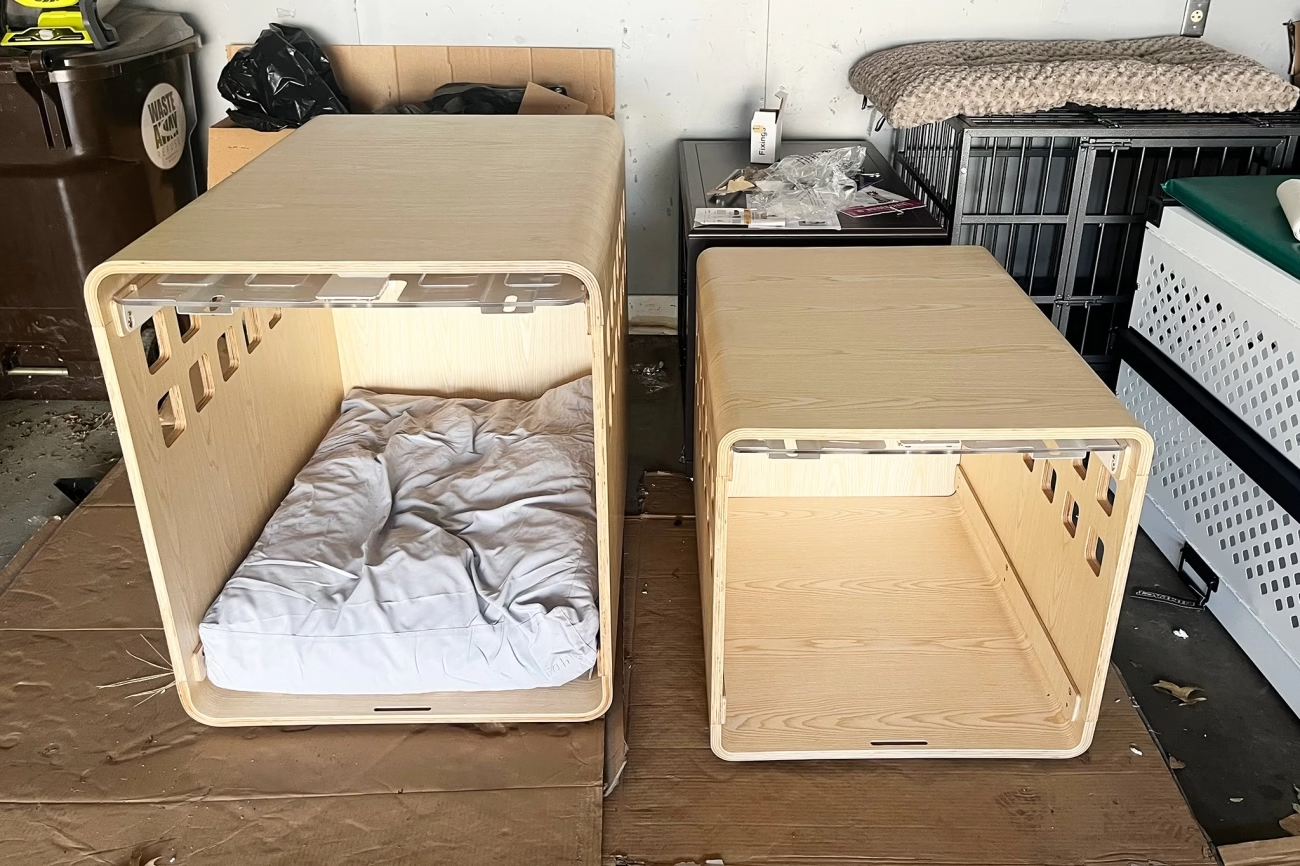
When choosing a large dog pet crate for your dog, there are a few essentials that make all the difference – especially for big and strong breeds. The right features keep your dog safe, comfortable, and secure while making life easier for you.
Durability and Material Strength
Large breeds are powerful, so the crate must withstand force, chewing, and daily wear.
Look for:
- Heavy-duty steel or reinforced aluminium for heavy chewers.
- Thicker wire gauge if choosing a metal cage.
- High-impact plastic if you need lighter weight but still want strength.
- Welded joints and anti-rust coatings for longer life.
Ventilation and Airflow
Big dogs generate more heat, so good airflow is essential – especially indoors and during warmer months.
- Wire crates offer the best ventilation.
- Plastic crates should have side vents for even circulation.
- For outdoor use, add shade covers to keep the crate cool while still allowing air movement.
Comfort Features
The best crate is one your dog actually likes being in. Aim for:
- Padded base or crate mat for joint comfort.
- Rounded edges to prevent injury.
- Escape-proof locks so your dog stays secure (look for dual-latch or slam-latch locks).
- Room for your dog to stand, turn, and stretch fully – no cramped corners.
Portability and Ease of Assembly
If you travel or move the crate around the house, portability matters:
- Foldable metal crates are easy to store.
- Lightweight but sturdy frames help with carrying.
- Tool-free assembly saves time.
- Handles or wheels for large heavy crates.
Safety Certifications and Standards
A safe crate keeps both dog and owner worry-free:
- Look for crates tested to BS EN safety standards where possible.
- Avoid crates with sharp edges, toxic coatings, or flimsy latches.
- For air travel, check for IATA-approved models.
Here’s a quick reference table:
| Feature | Why It Matters for Large Breeds | Recommended Option |
|---|---|---|
| Durability | Stops escapes & withstands strength | Heavy-duty steel or reinforced plastic |
| Ventilation | Prevents overheating & keeps dog comfortable | Wire panels / vented sides |
| Comfort | Encourages positive crate use | Padded base, rounded edges |
| Portability | Easier moving & storage | Foldable, lightweight frame |
| Safety | Ensures secure and hazard-free use | Certified, escape-proof design |
For more advice on heavy-duty dog crates for large breeds, you might want to explore our dog crate size guide before buying.
Local Considerations for Large Dog Pet Crates
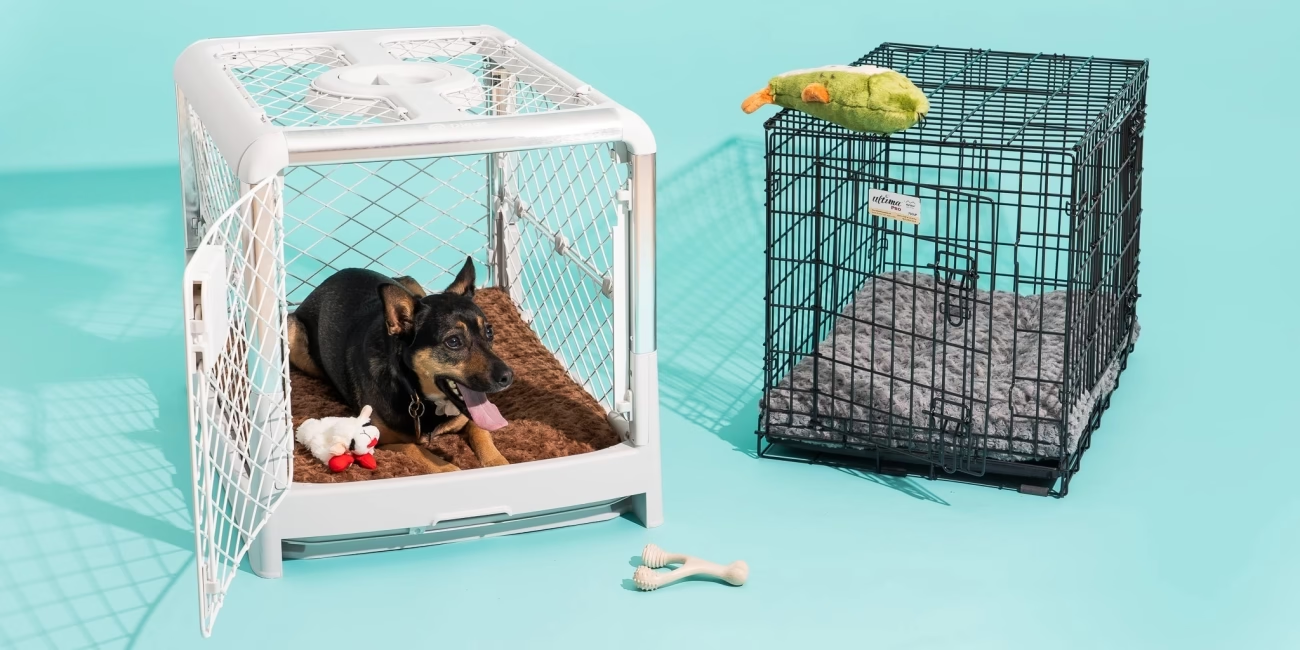
Weather and Material Choice
In the UK, weather plays a big role in the choice of a large dog pet crate. Our climate can swing from damp and cold winters to mild but sometimes humid summers.
- Cold and damp: Metal or wire crates can feel cold, so add insulated padding or a crate cover for comfort.
- Humid or wet conditions: Avoid untreated metal that can rust. Look for powder-coated steel or high-grade plastic to resist moisture.
- Warmer days: Prioritise good ventilation. Wire crates or crates with large mesh panels allow airflow, reducing stuffiness inside.
If your crate will be used outdoors even occasionally, the material must handle both rain and UV exposure. Plastic crates with UV stabilisers or galvanised metal are safer bets.
Indoor vs Outdoor Use
Your choice depends on where the crate will mainly sit:
- Indoor Use: Wire crates are most common as they’re well-ventilated, easy to clean, and let the dog see what’s going on around them. Soft-sided crates may suit calmer dogs indoors but won’t hold up to chewing or heavy use.
- Outdoor Use: Go for heavy-duty plastic or metal with weather protection. Ensure the crate has a roof or is kept under shelter to prevent direct exposure to rain and sun.
- Mixed Use: A portable large dog crate, with foldable design and durable finish, is ideal if you move it between the house, car, or garden.
Cleaning and Maintenance in UK Conditions
With muddy paws and the UK’s frequent rain, cleaning needs to be simple:
- Use removable, washable crate mats or bedding.
- Opt for crates with pull-out trays for easy wipe-downs.
- Disinfect regularly with pet-safe cleaners, especially if used outdoors.
- Check for moisture build-up to prevent rust or mould.
- For wire crates, inspect coatings and touch up scratches to avoid corrosion.
Tip: Keep a set of old towels or microfibre mats handy for drying your dog before putting them back in the crate, especially after woodland walks or rainy trips.
Top 5 Best Large Dog Pet Crates Recommended by Prillumen Light
Finding a large dog pet crate that suits your dog’s size, habits, and your home isn’t just about picking the cheapest one on the shelf. After testing and getting feedback from UK dog owners, here are the top five options that stand out locally — plus one from Prillumen Light designed specifically with large breeds in mind.
1. Prillumen Light Heavy-Duty XL Crate
- Type: Reinforced wire with double-lock mechanism
- Size Options: XL (48”), XXL (54”) for giant breeds
- Price Range: £160 – £210
- Pros:
- Tough steel frame for heavy chewers and escape artists
- Foldable design for storage and travel
- Rounded corners for safety
- Excellent ventilation for UK homes with central heating
- Tested for BS EN safety standards
2. Ellie-Bo Deluxe Double Door Crate
- Type: Wire dog crate with divider panel
- Size: Up to 54” for extra-large dogs
- Price Range: £90 – £120
- Pros:
- Divider lets the crate grow with your dog
- Double door access for flexible placement
- Easily collapsible for storage
- Affordable for the size and build
3. Impact Collapsible Dog Crate
- Type: Aluminium heavy-duty crate
- Size: Up to giant breed sizing
- Price Range: £500+ (premium)
- Pros:
- Unmatched durability for destructive dogs
- Airline-approved for travel
- Quick one-hand collapse system
- Corrosion-resistant — good for damp UK weather if used outdoors
4. MidWest Homes XXL Giant Dog Crate
- Type: Wire crate with drop-pin assembly
- Size: 54” (for dogs over 70kg)
- Price Range: £180 – £220
- Pros:
- Very spacious — suits Great Danes, Mastiffs
- Excellent ventilation
- Secure bolt latches
- Designed for indoor use
5. Petmate Ultra Vari Kennel
- Type: Heavy-duty plastic crate
- Size: Up to 48” for large breeds
- Price Range: £130 – £170
- Pros:
- Solid build ideal for nervous travellers
- Ventilation on all sides
- Good for colder areas in the UK
- Meets airline travel requirements
Why the Prillumen Light Model Stands Out in the UK Market:
Many large crates on the UK market are either very secure but not portable, or portable but easy for strong dogs to break out of. The Prillumen Light Heavy-Duty XL Crate is designed for:
- Strong escape-prone breeds (German Shepherds, Rottweilers, Mastiffs, etc.)
- Mixed indoor and occasional outdoor use thanks to rust-resistant coating
- Owners who want easy assembly without tools
- Long-term durability without sacrificing comfort
How to Train and Introduce Your Large Dog to a Crate
Getting a large dog pet crate is only step one – teaching your dog to feel safe and happy inside it is the real key. With large breeds, you’ll need a bit more patience and consistency, as their size and energy mean they can resist if you rush it. Here’s a clear process to follow.
Step by Step Crate Training for Large Breeds
- Pick the right spot – Place the crate somewhere quiet but not isolated, ideally in a living space so your dog feels included.
- Start with the door open – Let your dog explore without shutting them in. Toss in toys or a biscuit so they associate the crate with something good.
- Short sessions at first – Once they’re comfortable walking in, close the door for just a few seconds. Gradually increase the time.
- Add regular crate time – Use it for naps or downtime after walks. Avoid only using it when you’re leaving the house, or they’ll link it to being alone.
- Feed them inside – This reinforces that the crate is a safe, rewarding space.
- Stay calm throughout – Don’t make a big fuss when they go in or when you let them out.
Making the Crate a Positive Space
- Add comfort – A sturdy bed or mat suited to large breeds helps with joint support.
- Use chews and enrichment toys – Keeps them busy and mentally happy.
- Keep it clean – Smells and dampness put dogs off. Make sure bedding and the crate itself are fresh.
- Good airflow – Especially for big dogs that overheat quickly, open crates or mesh sides help.
Troubleshooting Common Issues
Problem: Dog cries or scratches to get out
- Increase exercise – tired dogs settle quicker.
- Go back a step in training and shorten crate periods.
- Never let them out while making noise, or they’ll learn it works.
Problem: Dog refuses to enter
- Use high-value treats they only get in the crate.
- Feed meals inside to build a strong link.
- Avoid forcing them in – this can build fear.
Problem: Dog destroys bedding or toys
- Try heavy-duty beds made for large dog crates.
- Supervise crate time with chew toys until you know what they can safely have.
By taking it slow and focusing on comfort, safety, and reward-based training, most large dogs will learn to see their crate as a secure spot rather than a cage.
Frequently Asked Questions About Large Dog Pet Crates
What size crate should I get for my large dog?
Choose a crate that’s tall enough for your dog to stand without hunching, and long enough for them to lie down and stretch out. For most large breeds in the UK, look for extra-large dog crate dimensions around 42–54 inches in length. If your dog is still growing, consider a large dog crate with a divider so you can adjust the space.
Is a wire or plastic crate better for large dogs?
- Wire crates: Good airflow, easy to see your dog, and foldable for storage. Best for indoor use and large non-destructive dogs.
- Plastic crates: More enclosed, often used for travel. Provide better insulation, which is useful in colder UK weather but can get warm in summer.
For heavy chewers or escape artists, a heavy-duty metal crate is often the safest choice.
Can I use a large dog crate outdoors?
You can, but you’ll need a weatherproof large dog crate made from rust-resistant materials. For the UK’s damp climate, choose powder-coated steel or treated metal to prevent corrosion. Also add a waterproof cover to protect against rain.
How can I make a crate comfortable for my large breed?
- Use a thick crate mat or orthopaedic bed for joint support.
- Add a soft blanket in cooler months.
- Make sure there are no sharp edges inside.
- Keep water within reach — a spill-proof crate bowl works well.
How long can a large dog stay in a crate?
For adult dogs, no longer than 4–6 hours at a time in the day. Puppies, seniors, or dogs with health problems need more frequent breaks. Crates are for rest and safety, not long-term confinement.
How do I crate train a large dog?
- Start with short, positive sessions.
- Feed them inside the crate to build trust.
- Avoid forcing them in — let them explore at their own pace.
- Rewards (treats or praise) help cement the crate as a safe space.
Which crate type is best for travel?
A portable large dog crate is ideal — soft-sided for short, calm car trips, or airline-approved plastic crates for flights. Always check UK airline regulations if flying.
How do I keep my crate clean in a UK home?
- Choose crates with removable trays for quick cleaning.
- For UK winters, avoid leaving damp bedding inside — wash regularly to prevent smells and bacteria.
- Use pet-safe cleaning products to avoid harming your dog.






 English
  French
  Arabic
  German
  Spanish
  Italian
  Portuguese
  Esperanto
  Greek
Greek  Finnish



Leave A Comment