

Why Supermarket Lighting Matters in the UK
Lighting in supermarkets is not just about making the store look bright. In the UK, where daylight hours vary significantly throughout the year, effective supermarket lighting plays a crucial role in shaping both customer experience and store performance.
Lighting and Customer Experience
For shoppers, visual appeal drives purchasing decisions. Well‑planned lighting enhances product visibility, highlights colours, and makes items look fresh and inviting. This is particularly important for fresh produce, bakery goods, and premium displays where presentation directly influences sales. Poor lighting can make products appear dull, impacting customer perception and reducing basket spend.
UK Shopping Habits and Daylight Conditions
In the UK, winter daylight is limited, and many people shop in the evenings under artificial light. This means supermarkets cannot rely on natural light alone and need consistent, high-quality illumination to ensure a pleasant shopping environment all year round. Seasonality also affects lighting strategy – for example, warmer tones can create a cosier feel in colder months, while cooler tones can feel fresher in summer.
Impact on Employee Productivity and Safety
Good supermarket lighting is essential for staff as well. Bright, even lighting helps employees work efficiently, restock shelves accurately, and operate checkout equipment without eye strain. It also reduces the risk of accidents in storage areas, aisles, and loading bays. In busy UK supermarkets, where footfall is high, properly lit spaces improve safety for both staff and shoppers, ensuring compliance with workplace regulations and enhancing operational efficiency.
Key Types of Supermarket Lighting Solutions UK
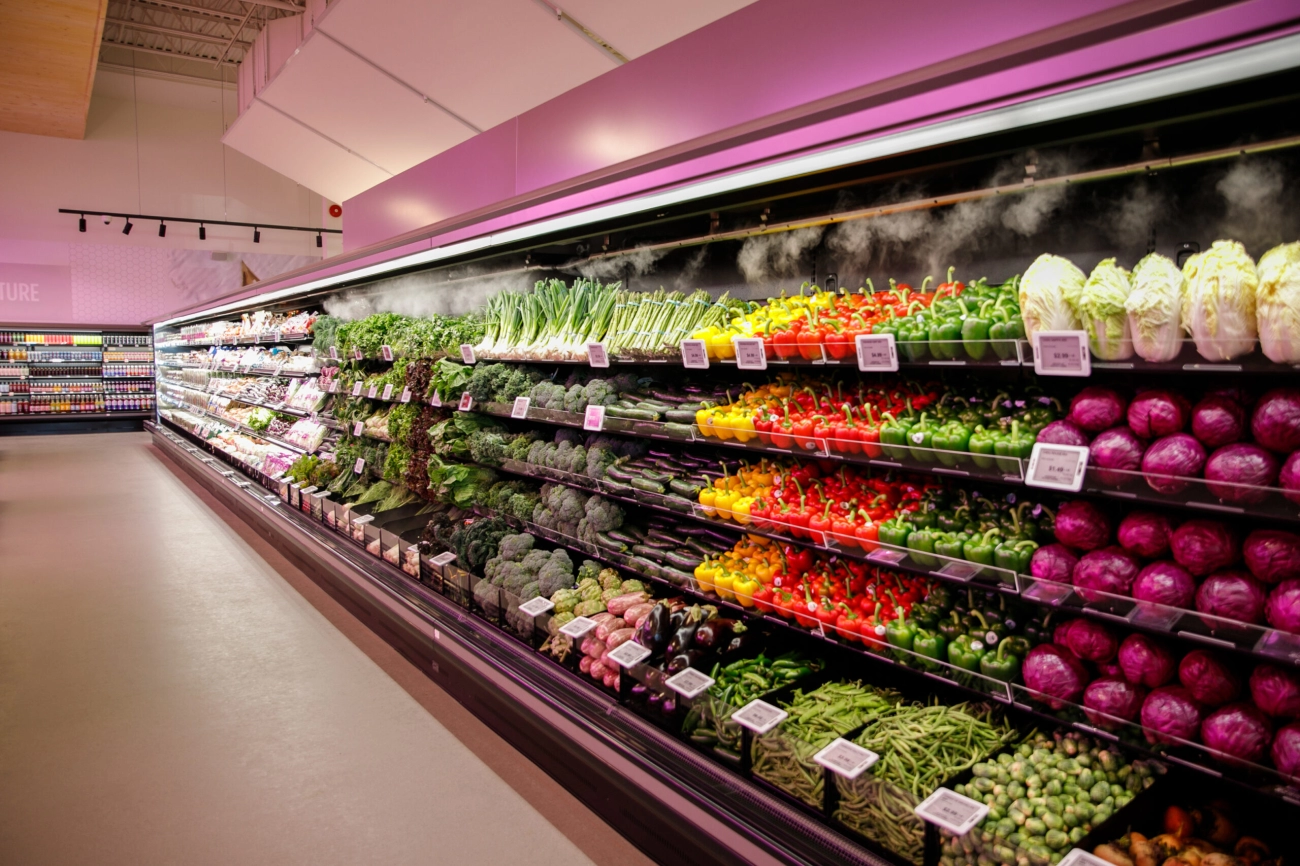
When you’re planning supermarket lighting in the UK, it’s not just about making the place bright enough. The right mix of lighting types can improve how products look, guide customers around the store, cut energy costs, and help stay in line with UK energy rules.
LED Lighting Benefits for Supermarkets
LED supermarket lighting has quickly become the go-to in the UK retail sector. Energy efficiency and long lifespan are the biggest draws, especially with rising energy prices.
Key benefits of LED lighting for supermarkets in the UK:
- Lower running costs – uses far less energy compared to traditional options.
- Longer life span – typically 5–10 years before needing replacement.
- Better product display – high colour rendering makes fresh produce look more appealing.
- Instant-on – no flicker or waiting time, ideal for customer comfort.
- Low maintenance – fewer bulb changes, less disruption to business.
Latest innovations include smart controllable LEDs that can adjust brightness during quiet trading hours or when natural daylight levels change – ideal for compliance with UK energy efficiency standards.
Fluorescent and Traditional Lighting in UK Stores
Fluorescent tubes have been a staple in UK supermarkets for decades. They’re cheaper to install than LEDs but have clear drawbacks:
- Lower energy efficiency
- Shorter lifespan
- More frequent maintenance
- Poor performance in cold areas (like chillers)
Halogen and other older lighting types are now rarely installed due to the UK’s push towards greener, low-energy retail environments.
Accent and Display Lighting for Retail Areas
Lighting isn’t only about general brightness – accent lighting plays a big role in UK stores.
- Fresh produce: Warmer tones make fruit and vegetables look more vibrant and fresh.
- Promotions and seasonal areas: Spotlights or track lighting draw customers’ eyes to offers.
- Bakery and hot food counters: Slightly warmer colour temperatures create an inviting feel.
Using layered lighting – general plus accent – improves product visibility and boosts sales, especially in competitive grocery markets.
Smart Lighting Controls and Sensor Systems
Smart lighting systems are a growing trend in UK supermarkets looking to cut costs without compromising shopping experience. These can include:
- Motion sensors – reduce lighting in quiet aisles during low footfall.
- Daylight harvesting – lighting automatically dims when natural light is available.
- Zone controls – manage different sections of the store independently.
- Energy reporting tools – track real-time consumption and savings.
By combining LED upgrades with smart control technologies, UK supermarkets can significantly lower operational costs while also meeting commercial lighting standards and sustainability targets.
UK Energy Efficiency Standards and Regulations for Supermarket Lighting
Overview of UK Regulations
Supermarket lighting in the UK is governed by strict energy efficiency standards to reduce carbon emissions and operating costs. Key regulations that impact retailers include:
- Part L of the Building Regulations – sets minimum energy performance requirements for new builds and refurbishments.
- Energy Performance Certificates (EPCs) – supermarkets must meet certain ratings to operate efficiently and avoid penalties.
- EcoDesign and RoHS directives – limit the use of inefficient lamps and hazardous materials like mercury.
- BREEAM – widely used for assessing sustainable building design, often influencing lighting system choices.
For many supermarkets, these regulations are not just about ticking boxes—they affect running costs, compliance, and even brand reputation.
Compliance with Carbon Reduction Commitment and Sustainability Goals
The Carbon Reduction Commitment (CRC) and the UK’s net zero targets mean supermarkets need to actively reduce electricity consumption. To meet these commitments, operators should:
- Switch to LED systems – they use up to 70% less energy compared to fluorescent fittings.
- Incorporate lighting controls – timers, dimmers, daylight sensors and occupancy controls help avoid wasted energy.
- Upgrade during store refits – replacing old luminaires while undertaking layout changes is cost-effective and avoids disruption.
- Track ongoing consumption – using smart metering or IoT-enabled lighting to identify and address high-usage periods.
By following these steps, supermarkets can align with sustainability schemes and avoid costly compliance failures.
Benefits of Low Energy Lighting Solutions
Adopting low-energy supermarket lighting solutions offers multiple long-term gains:
- Lower operating costs – energy-efficient lighting can cut lighting bills by a third or more.
- Improved lighting quality – LEDs deliver better colour rendering, enhancing product displays.
- Reduced carbon footprint – directly supports corporate environmental goals.
- Longer lifespan – less frequent replacements mean lower maintenance costs.
- Future-proofing – compliant with evolving commercial lighting standards in the UK.
For large rollouts, working with experienced UK supermarket lighting suppliers can help select compliant fittings and integrate them effectively. Retailers looking for flexible, modern lighting control could also explore smart chain store lighting to optimise energy use while keeping stores looking their best.
How to Choose the Best Supermarket Lighting for Your Store

Choosing the right supermarket lighting in the UK isn’t just about making the shop look nice – it affects sales, running costs, staff comfort, and compliance with local energy regulations. The wrong setup can make fresh produce look dull, waste energy, or even make aisles feel uncomfortable for shoppers.
Here’s what to consider before making your decision.
Key Factors to Consider
1. Store layout and ceiling height
- Wide aisles with high ceilings may need high-output LED fittings or suspended lighting.
- Smaller stores or low ceilings work better with uniform panel lights to avoid glare and shadows.
- Keep light distribution even so all areas feel consistent.
2. Product types and display needs
- Fresh food and produce: use accent or warm tone lighting to enhance colour.
- Packaged goods: opt for neutral white light for a clean, modern look.
- Promotional areas: slightly brighter lighting can increase attention.
3. Daylight availability
- Stores with good natural light can use daylight harvesting systems to dim artificial lighting automatically.
- In the UK, overcast days mean lighting must be consistent year-round.
Cost Considerations
Balancing initial investment with long-term savings is key:
| Option | Initial Cost | Running Cost | Maintenance | Best For |
|---|---|---|---|---|
| LED | Medium–High | Low | Low | Most UK supermarkets |
| Fluorescent | Low | Medium–High | Medium | Short-term budget use |
| Smart lighting systems | High | Very Low | Low–Medium | Larger chains aiming for top energy efficiency |
Tip: Paying more upfront for LED supermarket lighting often pays off in a few years through lower energy bills and reduced replacements. Energy-efficient lighting also supports UK Carbon Reduction Commitment targets.
Working With Lighting Designers and UK Suppliers
Professional lighting designers who understand UK retail lighting standards can:
- Plan brightness and layout according to commercial lighting regulations.
- Help you meet energy efficiency laws and reduce operational costs.
- Ensure lighting enhances customer dwell time and product appeal.
Choose a supplier with:
- Experience in UK supermarket lighting installations.
- A track record in energy-efficient solutions for retail.
- Support for installation, maintenance, and compliance checks.
Bottom line: The best supermarket lighting solution balances design, compliance, energy efficiency, and budget. Get professional advice, think long-term, and invest in the right system for your space.
Latest Trends and Innovations in Supermarket Lighting UK
Supermarket lighting in the UK is moving beyond simply making products visible – it’s now used to boost sales, cut energy bills, and improve the shopping experience. With energy costs and customer expectations high, many stores are investing in fresh lighting solutions.
Smart lighting and IoT integration
More UK supermarkets are using smart lighting systems linked to IoT technology. These allow managers to:
- Automate brightness levels based on the time of day.
- Highlight promotional zones immediately via remote control.
- Track energy use and detect faults before they cost money.
Systems like this also tie into building management systems to keep energy consumption under control, which is essential for meeting UK energy efficiency targets.
Tunable white and colour temperature control
Lighting temperature changes how food looks. Tunable white lighting lets retailers adjust between warmer tones for bakery items and cooler tones for fresh fish or dairy. The result: products look fresher and more appealing, influencing buying decisions.
- Bakery: Warm white lighting (2,700–3,000K) for a golden, inviting look.
- Fresh produce: Neutral-to-cool lighting (3,500–4,500K) to make colours stand out.
- Meat counters: Specialised lighting to keep reds looking rich without distortion.
Human centric lighting for wellbeing
Lighting impacts how customers shop and how staff perform. Human centric lighting mimics natural light patterns, helping supermarket floors feel more comfortable, especially in winter months when UK daylight is short.
Benefits include:
- Longer dwell times from customers in well-lit, welcoming areas.
- Improved staff alertness and accuracy in tasks like stocking or scanning.
Case studies and real results in the UK
Some large supermarket chains have already seen big wins from lighting upgrades:
- Tesco Extra – Manchester: Installed LED smart controls, cut lighting costs by over 40% and increased fresh produce sales.
- Morrisons – Leeds: Switched to tunable white lighting for fresh sections, saw a noticeable lift in visual quality and improved customer feedback.
- A regional Co-op store: Integrated motion sensors in low footfall aisles and reduced annual lighting energy use by 30%.
Energy Saving Tips for Supermarket Lighting UK
Cutting energy costs in a supermarket doesn’t just protect your bottom line — it helps meet sustainability goals and ensures better lighting for shoppers. Here are a few actionable ways UK supermarkets can reduce lighting energy use without sacrificing quality.
Scheduling and Daylight Harvesting
In the UK, daylight hours vary widely across the year. Making full use of natural daylight can slash your lighting bill.
Practical steps:
- Install daylight sensors that adjust artificial lighting based on available sunlight.
- Zone lighting so areas near windows dim automatically when there’s enough daylight.
- Use time schedules to turn lights off outside operating hours, allowing only security or emergency lighting to remain on.
- In summer, when daylight lasts longer, shorten the lighting schedule to avoid wasted energy.
LED Upgrades and Retrofits
Switching old fluorescent or halogen fittings to LED supermarket lighting offers instant savings — often cutting energy use by up to 50%.
Benefits for UK supermarkets:
- Lower running costs and reduced CO₂ emissions.
- Consistent light quality in both warm and cold areas of the store.
- Wide range of supermarket lighting solutions UK-wide, from energy-efficient LED panels to commercial LED track lights for supermarket aisles that highlight products perfectly.
- Longer lifespan means fewer maintenance call-outs.
If replacing all fittings at once isn’t in your budget, retrofit existing light fittings with LED lamps — a cost-effective upgrade with quick payback.
Maintenance Best Practices to Prolong Lighting Lifespan
Energy efficiency isn’t only about choosing the right fitting — proper upkeep keeps your system running at peak performance.
Best practices:
- Clean lenses and reflectors regularly to avoid dust build-up that reduces brightness and forces lights to work harder.
- Replace or repair damaged fittings before they start drawing extra power.
- Schedule annual lighting audits to identify underperforming lights and areas with inefficient beam placement.
- Keep a simple maintenance log so issues are tracked and resolved quickly.
For more tailored guidance, supermarkets in the UK often work with specialist retail lighting designers who understand both UK energy efficiency standards and shopper behaviour patterns. This ensures your lighting plan stays cost-effective and regulation-compliant.





 English
  French
  Arabic
  German
  Spanish
  Italian
  Portuguese
  Esperanto
  Greek
Greek  Finnish

Leave A Comment