

Why Office Lighting Design Matters
Choosing the right commercial office lighting is not just a utility choice—it is a strategic business decision. The way a workspace is lit directly influences operational efficiency, brand perception, and the daily performance of everyone within the building. Failing to optimize this foundational element can lead to higher operational costs and a disengaged workforce.
Impact on Employee Wellbeing and Productivity
Proper office lighting is a critical catalyst for daily productivity and employee health. Poorly planned spaces with improper brightness or high glare often cause eye strain, fatigue, and chronic headaches, which directly lower daily output.
- Focus and Alertness: Well-balanced illumination supports high visual acuity, allowing employees to remain focused on complex tasks for longer periods without physical discomfort.
- Circadian Alignment: Quality commercial lighting mimics natural light shifts, stabilizing energy levels throughout the workday.
- Reduced Absenteeism: By mitigating physical strain and fatigue, optimized lighting fosters a healthier workspace, directly reducing health-related downtime.
Enhancing Aesthetics and Brand Identity
Modern office lighting design does more than illuminate a room; it shapes how clients, partners, and talent perceive an organization. The choice of fixtures and lighting layout serves as a visual extension of a company’s professional standards.
- First Impressions: A crisp, well-lit reception area and boardroom instantly communicate professionalism, innovation, and attention to detail to visiting clients.
- Architectural Depth: Strategic lighting defines structural zones, makes compact areas feel more expansive, and highlights key design elements of the workspace.
- Corporate Culture: Sleek, modern fixtures reinforce a forward-thinking, high-performance company culture, making the environment more attractive to top-tier talent.
Key Types of Commercial Office Lighting Fixtures
Choosing the right layout requires knowing which fixtures handle the heavy lifting in a modern workspace. Different areas require different setups to keep a team sharp and focused throughout the day.
LED Panel and Troffer Lights
LED panels and troffer lights are the backbone of general office illumination. Typically dropped into standard ceiling grids, these fixtures provide wide, even light distribution that washes the entire room. They are highly efficient, drastically cut down on energy bills, and eliminate the harsh flickering common with old fluorescent tubes. For standard open-plan seating, these are the reliable go-to option for consistent baseline brightness.

Linear Lighting Systems
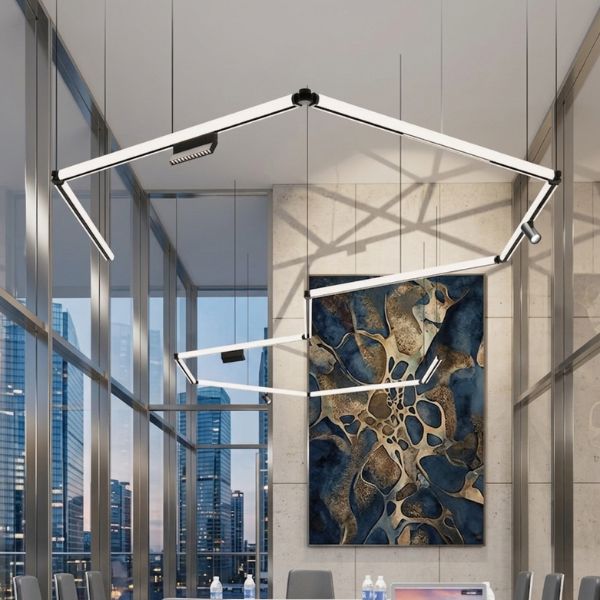
Linear lighting fixtures offer a sleek, continuous line of light that works perfectly for modern, minimalist office designs. These systems can be recessed, surface-mounted, or suspended directly over long communal desks and conference tables. They add a clean architectural feel to the workspace while delivering high-output, low-glare illumination right where teams collaborate.

Recessed Downlights and Track Lighting
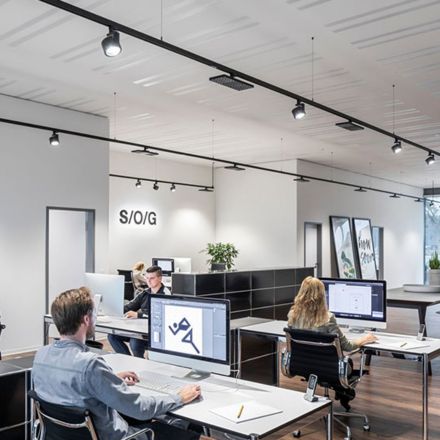
Recessed downlights are ideal for pathways, reception areas, and breakrooms where you need clean, unobtrusive light without bulky fixtures hanging down. For spaces that require more flexibility, track lighting allows you to angle individual beams to highlight specific zones, feature walls, or artwork. If you are wondering are track lights good for office settings, the answer is a definitive yes—especially for creative workspaces, meeting rooms, and collaborative hubs that demand adaptable, directional lighting.
Essential Technical Factors When Choosing Office Lighting
Getting your commercial workspace illuminated correctly requires looking past the visual design of a fixture and focusing on the core technical metrics. When figuring out how to choose commercial office lighting that keeps teams sharp and reduces eye strain, three distinct technical variables must be balanced.
Brightness and Lux Levels
Brightness in a professional workspace is measured in lux (lumens per square meter). Insufficient light causes drowsiness and eye fatigue, while excessive brightness triggers headaches.
Standard office setups require specific targets depending on the task at hand:
| Workspace Area | Recommended Lux Level | Primary Goal |
|---|---|---|
| General Open Offices | 500 Lux | Sustained PC work and reading |
| cURL Too many subrequests. | 300–400 lux | Clear visibility for presentations and notes |
| Corridors and Breakrooms | 100–200 lux | Safe movement and casual relaxation |
| Detailed Drafting / Design Work | 750 lux | High-focus visual accuracy |
Color Temperature (CCT) and Color Rendering Index (CRI)
Color temperature determines the tone of the light, measured in Kelvin (K). For a productive environment, we utilize Correlated Color Temperature (CCT) to mimic natural alertness cycles.
- cURL Too many subrequests. Best for breakrooms, lobbies, and casual lounges to encourage relaxation.
- cURL Too many subrequests. The industry standard for open office areas. It promotes alertness without feeling clinical.
- 5000K+ (Daylight): Reserved for specialized areas like printing shops or labs where absolute precision matters.
Pair CCT with a high Farbwiedergabeindex (CRI) to ensure colors look accurate under artificial light. Always specify a CRI of 80 or higher for standard workspaces, and 90 or higher for design departments. For general ambient setups, understanding grundlegendes Beleuchtungswissen regarding lumens and color metrics will protect you from making costly bulk purchasing mistakes.
Glare Control and Unified Glare Rating (UGR)
Direct glare from exposed bulbs or harsh reflections off computer monitors severely cuts down workplace comfort. To quantify this, look at the Unified Glare Rating (UGR), which is an engineered scale ranking psychological glare from 10 to 30.
The Office Standard: To maintain compliance and protect worker vision, commercial office lighting must maintain a UGR of less than 19.
To hit a UGR less than 19, use fixtures with recessed optics, specialized baffles, or frosted diffusers that scatter light evenly rather than blasting it straight down.
Implementing the Three Layers of Lighting
When designing a commercial office space, relying on a single overhead light source is a mistake. We approach office design by layering three distinct types of illumination. This creates visual depth, reduces eye strain, and ensures that every square foot of the office serves its intended purpose.
Ambient Lighting for General Illumination
Ambient lighting is the foundation of your entire office layout. It provides the uniform, base level of light needed to navigate corridors, reception areas, and open-plan workspaces safely and comfortably.
- Primary Goal: To mimic natural daylight and establish a comfortable environment without creating harsh shadows.
- Best Fixtures: Recessed LED troffers, large surface-mounted panels, or indirect linear suspension lights that bounce light off the ceiling.
- Layout Tip: Keep ambient light levels consistent to avoid dark pockets that make the office feel smaller and less inviting.
Task Lighting for Specific Workstations
No matter how good your general overhead light is, employees need direct illumination to focus on detailed desk work, reading physical documents, or collaborating at conference tables. Task lighting gives individuals control over their immediate environment.
- Desk Workstations: Adjustable LED desk lamps allow employees to position light exactly where they need it, minimizing screen glare.
- Meeting Rooms & Counters: Overhead directional downlights or adjustable fixtures ensure high visibility during presentations and collaborative sessions. For spaces requiring flexible directional focus, integrating a zoomable LED track down light allows you to narrow or widen the beam angle to suit changing desk and table configurations perfectly.
Accent Lighting for Architectural Focus
Accent lighting adds personality and brand identity to the workplace. Instead of serving a purely functional purpose, it draws the eye to specific design elements, artwork, or structural features.
- Strategic Placement: Use accent fixtures in high-traffic zones like lobbies, elevator banks, and executive suites to highlight your company logo or feature walls.
- Creating Contrast: Aim for a 3:1 brightness ratio between your accent lighting and the surrounding ambient light to make the focal point pop effectively.
- Fixture Options: Directional wall-washers, track spotlights, and linear LED strips tucked under cabinetry or inside recessed ceiling coves work best to elevate the professional aesthetic of the office.
Modern Trends and Technology in Workspace Lighting
Smart Control Systems and Automation
The days of flipped wall switches controlling an entire floor are over. Modern office setups rely on smart automated networks that adapt to real-world usage.
- Occupancy Sensors: Lights automatically turn off in empty conference rooms or corridors, slashing unnecessary energy spend.
- Daylight Harvesting: Photocells detect incoming natural sunlight and automatically dim the indoor fixtures to maintain a constant, comfortable light level.
- App and Mesh Controls: Managing whole zones or individual fixtures happens via localized software, giving teams full flexibility over their environment.
Human-Centric and Biodynamic Lighting
We design spaces around human biology. Human-centric lighting (HCL) mimics the natural progression of daylight to support the circadian rhythms of your team, keeping energy high during the morning and reducing eye strain in the afternoon.
- Morning Boost: Crisp, cool blue-white light (5000K) to suppress melatonin and increase alertness.
- Mid-Day Focus: Clean, balanced white light for high-focus tasks.
- Late Afternoon Transition: Warm, golden light tones (2700K) to ease mental fatigue as the workday winds down.
For specialized, collaborative workspaces or modern breakout zones, integrating flexible solutions like an adaptable recessed track lighting system allows you to adjust both the position and the warmth of your fixtures as the room’s function changes throughout the day.
Energy Efficiency and Sustainable Integration
Sustainability isn’t just a corporate buzzword; it directly dictates your operational bottom line. High-efficiency commercial LEDs coupled with smart power management offer the fastest ROI in office renovation.
| Efficiency Metric | cURL Too many subrequests. | Modern LED Integration |
|---|---|---|
| Durchschnittliche Lebensdauer | 10,000 – 15,000 hours | 50.000+ Stunden |
| Stromverbrauch | High wattage / high heat output | Up to 70% less energy consumption |
| Maintenance Cycle | Frequent ballasts & lamp replacements | Near-zero maintenance for years |
Investing in smart, sustainable integration significantly drops your utility bills while helping the building meet modern green energy compliance standards globally.
How to Plan and Design Your Office Layout
Planning a workspace layout requires a strategic approach to fixture placement, spatial limits, and architecture. To master how to choose commercial office lighting, you must align your physical desk arrangements with tailored illumination strategies.
Assessing Space Requirements and Constraints
Every square foot of a commercial property dictates your fixture selection. Low ceilings require flush or recessed options to avoid making the room feel cramped, while high-ceiling open plans need suspended fixtures to drop the illumination down to the working plane.
| Space Element | Layout Challenge | Lighting Solution |
|---|---|---|
| Low Ceilings (< 9ft) | Headroom constraints, hot spots | Recessed troffers, slim LED panels |
| High Ceilings (> 12ft) | Light dissipation, high maintenance | Suspended linear systems, industrial pendants |
| Compact Areas / Hallways | Structural shadows, tight spacing | Commercial downlights with wide beam angles |
Zoning for Flexibility and Functionality
Modern workspaces are fluid. A single floor plan often contains quiet focus zones, collaborative meeting spaces, and break areas. Designing a fixed, uniform lighting grid across the entire floor wastes energy and lowers employee comfort.
- Focus Zones: Dedicate crisp, glare-free task lighting directly over workstations to keep team members sharp and reduce eye strain.
- Conference Rooms: Install dimmable systems with smart controls to easily switch from presentation mode to open discussion.
- Common Areas: Use warmer, softer ambient fixtures in cafeterias and lounges to encourage relaxation and casual interaction.
Maximizing Natural Daylight
Artificial fixtures must complement natural light, not fight it. Relying on daylight harvesting helps cut utility bills and keeps the indoor environment connected to the outside world.
- Daylight Sensing: Implement automated dimmers near perimeter windows that dial back LED output when sunlight pours in.
- Desk Orientation: Position workstations perpendicular to window walls to prevent harsh glare on computer monitors and minimize distracting shadows.
- Open Sightlines: Keep tall partition walls away from external windows to allow natural daylight to penetrate deeper into the interior core.
Cost Analysis and Selection Strategies
Evaluating Long-Term Energy and Maintenance Costs
When figuring out how to choose commercial office lighting, looking only at the price tag on the box is a trap. The real cost of ownership hides in your monthly utility bills and future maintenance cycles. Upgrading to high-efficiency systems drastically slashes ongoing overhead.
- Energieeinsparungen: Commercial-grade LEDs consume up to 70% less electricity than legacy fluorescent tubes, directly lowering monthly operational expenses.
- Operational Lifespan: Quality office fixtures last 50,000 to 100,000 hours, meaning maintenance crews spend less time on ladders replacing burned-out lamps.
- Thermal Efficiency: Advanced fixtures emit significantly less heat, reducing the load on the building’s HVAC system during hot summer months.
For specialized areas like office kitchenettes or breakrooms, integrating targeted solutions like <a href=”https://prillumen.com/product/led-track-lighting-for-kitchen/“>flexible LED track lighting allows for directional illumination without wasting energy on over-lighting unused spaces.
Comparing Financing and Upfront Cost Solutions
Balancing capital expenditure with long-term ROI requires a strategic approach to purchasing. High-quality workplace fixtures demand a larger initial investment, but several financial strategies can ease the upfront burden while securing rapid payback periods.
| Strategy | Financial Impact | Primary Benefit |
|---|---|---|
| Utility Rebates | Reduces upfront hardware costs | Instant savings through local energy programs |
| Lighting-as-a-Service (LaaS) | Zero capital expenditure ($0 down) | Shifts costs to predictable monthly operating expenses |
| Bulk Wholesale Sourcing | Lowers per-unit fixture pricing | Maximizes purchasing power for large-scale buildouts |
To maximize your return, prioritize durable, certified fixtures that qualify for local commercial energy incentives. This ensures the retrofitted system pays for itself through utility savings far ahead of schedule.


 German
  English
  French
  Arabic
  Spanish
  Italian
  Portuguese
  Esperanto
  Greek
Greek  Finnish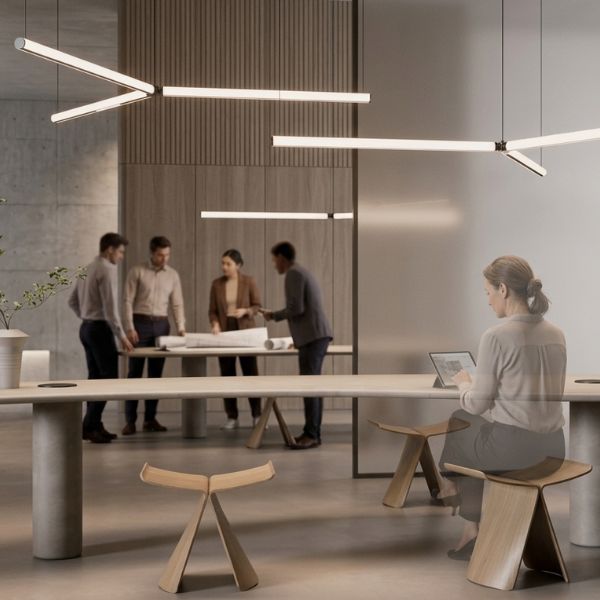

Einen Kommentar hinterlassen